
Introduction
Offset Printing vs Digital Printing Choosing the right printing method is one of the most important decisions for any business. Whether you’re printing business cards, brochures, flyers, catalogs, packaging, labels, or marketing materials, the printing technology you choose directly affects the final quality, production time, and overall cost.
The two most common commercial printing methods are Offset Printing and Digital Printing. While both deliver professional results, they are designed for different production needs. Offset printing is known for its exceptional color accuracy and cost efficiency on large-volume orders, whereas digital printing offers faster turnaround times, flexible customization, and affordable short-run printing.
Understanding the differences between these two technologies can help you avoid unnecessary expenses, improve print quality, and choose the most efficient solution for your project.
In this comprehensive guide, we’ll explain how offset and digital printing work, compare their advantages and disadvantages, and help you determine which printing method is the best choice based on your budget, quantity, timeline, and business goals.
What Is Offset Printing? Understanding the Traditional Commercial Printing Process
What Is Offset Printing?
Offset Printing vs Digital Printing is one of the most common comparisons businesses make
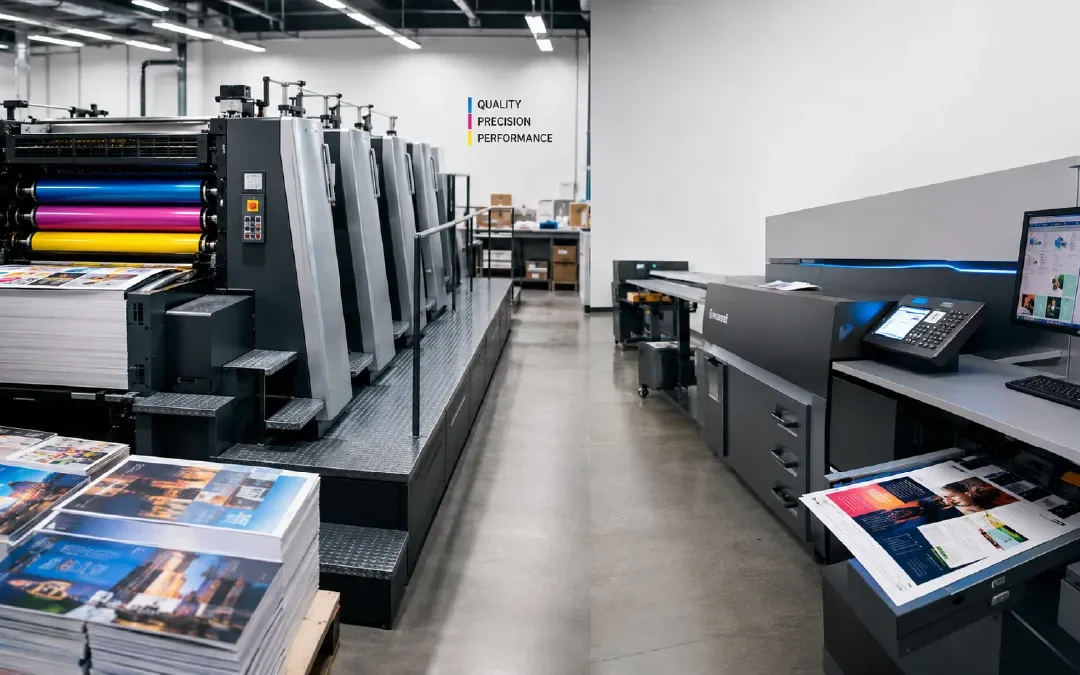
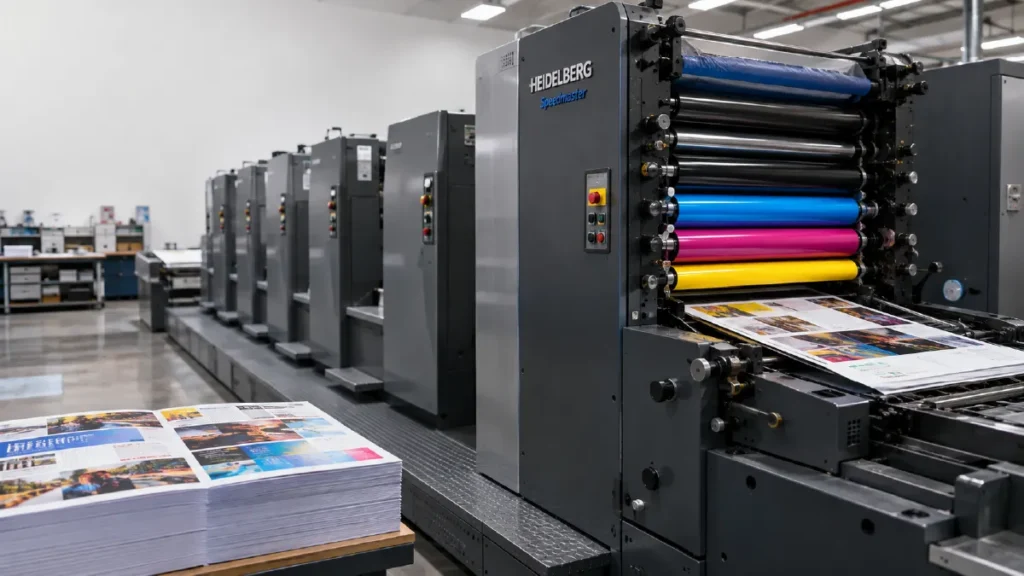
Offset printing is a commercial printing technique that transfers ink from a metal printing plate to a rubber blanket before it reaches the paper. Instead of applying ink directly to the printing surface, the rubber blanket creates a cleaner and more consistent transfer, resulting in exceptional image sharpness and color accuracy.
Because each color is printed separately using the CMYK process, this method delivers precise color reproduction and excellent consistency across thousands of printed copies. Once the press is calibrated, every sheet maintains nearly identical quality from the first print to the last.
For this reason, offset printing remains the preferred choice for large-scale commercial production where premium quality and consistent results are essential. This Offset Printing vs Digital Printing guide will help you choose the right solution…
How Does Offset Printing Work?
The offset printing process follows a series of carefully controlled production stages:
1. Artwork Preparation
The design file is professionally prepared in CMYK color mode with bleed, crop marks, and high-resolution graphics to ensure accurate printing.
2. Plate Production
A separate aluminum printing plate is produced for each process color—Cyan, Magenta, Yellow, and Black (CMYK). Each plate carries the image information for its specific ink.
3. Ink Transfer
Ink is applied to the printing plate and transferred onto a rubber blanket cylinder. The blanket then transfers the image onto the paper with uniform pressure, creating crisp text and vibrant graphics.
4. Paper Feeding
Sheets pass through multiple printing units, allowing each CMYK color to be applied in perfect registration until the final image is complete.
5. Finishing
After printing, the sheets may undergo additional finishing processes such as cutting, folding, laminating, UV coating, embossing, die-cutting, binding, or perforation, depending on the project’s requirements.
Common Applications
Offset printing is widely used for projects that require large quantities and premium print quality, including:
- Company brochures
- Product catalogs
- Corporate stationery
- Premium business cards
- Books and magazines
- Packaging boxes
- Paper bags
- Flyers and leaflets
- Annual reports
- Marketing materials
Its ability to maintain outstanding quality across long print runs makes it one of the most trusted production methods in the commercial printing industry.
What Is Digital Printing? A Fast and Flexible Solution for Modern Print Projects
What Is Digital Printing?
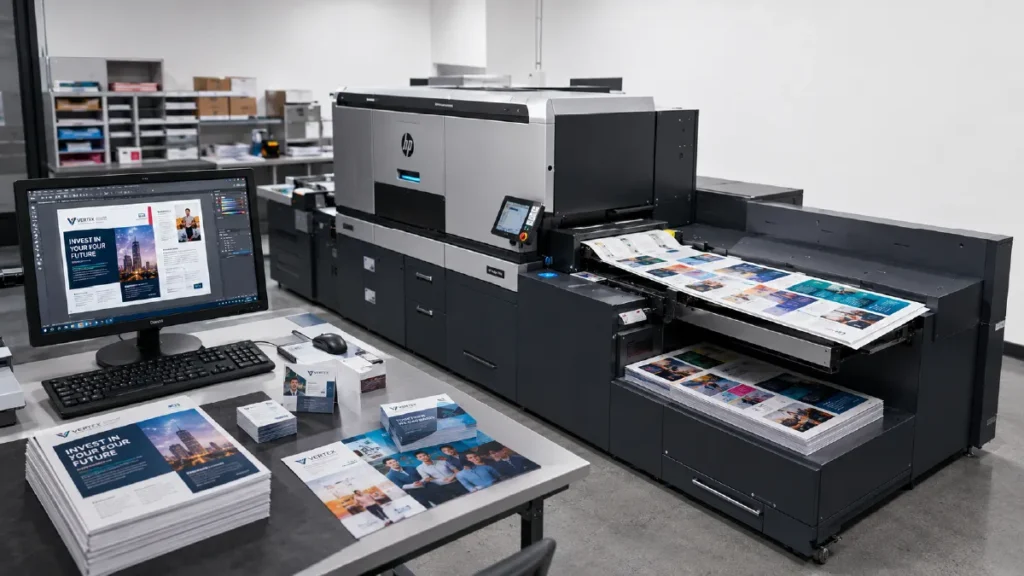
Digital printing is a modern printing technology that transfers digital artwork directly from a computer to the printing device without the need for metal printing plates. Unlike traditional production methods, every print is created from a digital file, making the process significantly faster and more flexible.
Because there is no plate-making or lengthy press setup, digital printing is an excellent choice for short production runs, on-demand printing, and projects with tight deadlines. Businesses can produce exactly the quantity they need while minimizing setup time and reducing material waste.
Another major advantage is the ability to customize every printed piece. Variable data printing allows names, serial numbers, QR codes, addresses, barcodes, and promotional messages to change automatically from one print to the next without slowing production.
How Does Digital Printing Work?
Digital printing follows a streamlined workflow that eliminates many of the preparation steps required by traditional printing methods.
1. Digital File Preparation
The artwork is prepared in a print-ready format with the correct dimensions, color profile, bleed, and resolution before being sent directly to the printer.
2. Direct File Processing
The printer’s Raster Image Processor (RIP) converts the design into printable data, ensuring accurate color reproduction and image placement.
3. Image Transfer
Using advanced toner or inkjet technology, the printer applies the image directly onto the paper in a single automated process without using printing plates.
4. Instant Production
Printing begins almost immediately after the file is received, making digital production one of the fastest commercial printing solutions available.
5. Finishing
The printed materials can then be trimmed, folded, laminated, creased, bound, or otherwise finished according to the project’s specifications.
When Is Digital Printing the Best Choice?
Digital printing is ideal when speed, flexibility, and lower initial costs are more important than producing very high volumes.
Common applications include:
- Business cards
- Flyers
- Brochures
- Posters
- Restaurant menus
- Event invitations
- Certificates
- Labels and stickers
- Presentation folders
- Training manuals
- Personalized direct mail
- Small-batch packaging prototypes
For businesses that frequently update designs or require customized marketing materials, digital printing provides an efficient and cost-effective production solution with professional-quality results.
Offset Printing vs Digital Printing: A Side-by-Side Comparison
Comparing the Two Printing Methods
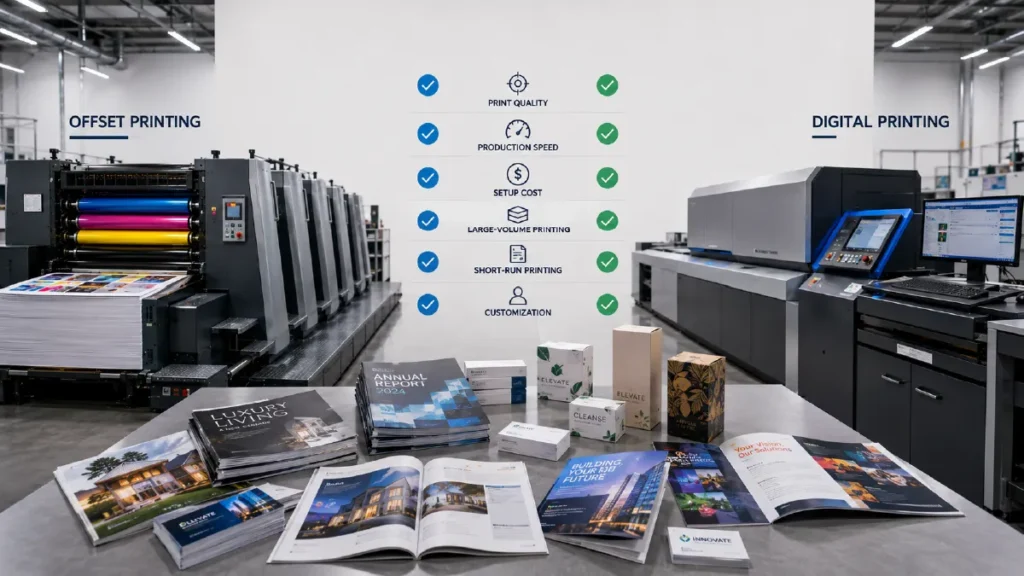
Both technologies deliver professional-quality results, but they are designed for different production requirements. The right choice depends on your print quantity, budget, delivery schedule, customization needs, and expected finish quality.
The table below highlights the most important differences.
| Feature | Offset Printing | Digital Printing |
|---|---|---|
| Best for | Large production runs | Small and medium print runs |
| Setup Time | Longer due to plate preparation | Minimal setup, ready to print |
| Turnaround Time | Slower for small jobs | Very fast production |
| Initial Cost | Higher setup investment | Low setup cost |
| Cost Per Copy | Decreases significantly on high volumes | Remains relatively stable regardless of quantity |
| Print Quality | Exceptional color consistency and fine detail | Excellent quality for most commercial applications |
| Color Accuracy | Outstanding, especially for brand colors | Very good but may vary slightly between devices |
| Pantone Color Support | Excellent | Limited depending on equipment |
| Personalization | Not practical for variable data | Ideal for personalized printing |
| Variable Data Printing | No | Yes |
| Large Quantity Orders | Most cost-effective | Less economical at high volumes |
| Short-Run Projects | Not the most efficient option | Highly cost-effective |
| Special Finishes | Excellent compatibility with premium finishing techniques | Compatible with many finishing options, depending on equipment |
Which Option Delivers Better Value?
There isn’t a single printing method that’s universally better. The most suitable option depends on the goals of your project.
If your priority is producing thousands of identical prints with outstanding color consistency and a lower cost per unit, traditional press production is usually the better investment.
If your project requires a fast turnaround, lower upfront costs, or personalized content for each printed piece, digital production provides greater flexibility and efficiency.
Rather than asking which technology is superior, it’s more practical to determine which one aligns with your quantity, timeline, and budget. Choosing the right production method from the beginning helps reduce costs, improve efficiency, and ensure the finished product meets your expectations.
How to Choose the Right Printing Method for Your Project
Which Printing Method Should You Choose?
Selecting the right production method isn’t about finding the “best” technology—it’s about choosing the one that matches your project’s objectives. Factors such as order quantity, delivery deadline, customization requirements, and budget all influence the final decision.
Below are common scenarios that can help you determine which option is the better fit.
Choose Offset Printing When:
Offset printing is the preferred solution for large-volume production where consistent quality and long-term cost savings are priorities.
It is an excellent choice if you need:
- Thousands of identical printed copies
- Superior color consistency across every sheet
- Accurate reproduction of brand or Pantone colors
- Premium image quality for high-end marketing materials
- Specialty finishes such as spot UV, embossing, foil stamping, or die-cutting
- Lower cost per unit on large production runs
Typical projects include:
- Product catalogs
- Corporate brochures
- Books and magazines
- Packaging boxes
- Paper shopping bags
- Annual reports
- Corporate stationery
- High-volume promotional materials
Choose Digital Printing When:
Digital printing is the ideal solution for projects that require speed, flexibility, and smaller quantities.
It works best when you need:
- Fast turnaround times
- Short production runs
- On-demand printing
- Personalized or variable data printing
- Frequent design updates
- Cost-effective printing without plate setup
Common applications include:
- Business cards
- Flyers
- Posters
- Restaurant menus
- Event invitations
- Labels and stickers
- Personalized direct mail
- Product prototypes
- Training manuals
- Presentation materials
Key Factors to Consider Before Placing an Order
Before selecting a printing method, ask yourself the following questions:
- How many copies do I need?
- How quickly do I need the finished products?
- Will every printed piece contain the same design, or do I need personalization?
- Is premium color accuracy essential for my brand?
- What finishing options are required?
- Which solution offers the best value within my budget?
Answering these questions early helps avoid unnecessary production costs and ensures the final product meets both your expectations and business objectives.
Expert Recommendation
For many businesses, there isn’t a single solution that fits every project. Marketing materials printed in large quantities often benefit from offset production, while smaller campaigns, promotional updates, and personalized materials are better suited to digital printing.
Working with an experienced commercial printing provider ensures that every project is produced using the most efficient method, delivering the right balance of quality, turnaround time, and cost-effectiveness.
Final Thoughts
Choosing a commercial printing solution isn’t simply about selecting a machine—it’s about finding the most effective production process for your specific project.
Large-volume orders generally benefit from traditional press production because of its outstanding color consistency, premium image quality, and lower cost per unit. On the other hand, digital production offers exceptional flexibility, faster turnaround, and affordable short-run printing, making it ideal for businesses that need quick delivery or personalized materials.
Understanding the strengths of each technology allows you to make informed decisions, reduce production costs, and achieve better printing results. Whether you’re producing business cards, brochures, packaging, catalogs, labels, posters, or marketing materials, selecting the appropriate workflow will ensure your printed products meet both your quality expectations and budget.
If you’re unsure which option is right for your project, consulting an experienced commercial printing company can help you choose the most efficient solution before production begins.
Frequently Asked Questions (FAQs)
Is offset printing better than digital printing?
Neither method is universally better. Traditional press production is typically the preferred choice for high-volume jobs requiring exceptional color consistency, while digital production is better suited for short runs, fast turnaround, and personalized printing.
Which printing method is more affordable?
For smaller quantities, digital printing usually has the lower overall cost because there are no plate preparation charges. For large production runs, traditional press printing generally becomes more economical due to its lower cost per printed piece.
Which option delivers higher print quality?
Both technologies produce professional-quality results. However, traditional press production is often preferred for premium commercial projects because it offers extremely consistent color reproduction, sharper fine details, and excellent support for specialty inks and finishing techniques.
Can I print personalized materials?
Yes. Digital printing supports variable data printing, allowing every printed piece to contain different names, addresses, serial numbers, QR codes, or promotional messages without interrupting production.
Which method is faster?
Digital printing requires minimal setup, making it the faster choice for most small and medium-sized orders. Traditional press production involves plate preparation and press calibration, which increases setup time before printing begins.
Which products are commonly produced using commercial printing?
Businesses frequently print:
- Business cards
- Flyers
- Brochures
- Catalogs
- Packaging boxes
- Paper bags
- Labels and stickers
- Posters
- Books and magazines
- Corporate stationery
- Marketing materials
- Presentation folders
The most suitable production method depends on the quantity, deadline, budget, and finishing requirements of each project.
Need Professional Printing Services?
At GreenwayPrint, we provide high-quality commercial printing solutions tailored to businesses of all sizes. Whether you need a short-run marketing campaign, premium packaging, corporate stationery, or high-volume promotional materials, our team can recommend the most suitable production process based on your goals, timeline, and budget.
From prepress preparation to finishing and delivery, we focus on producing consistent, professional results that help your brand make a lasting impression.
Contact GreenwayPrint today for expert guidance and a customized quotation for your next printing project.