Introduction
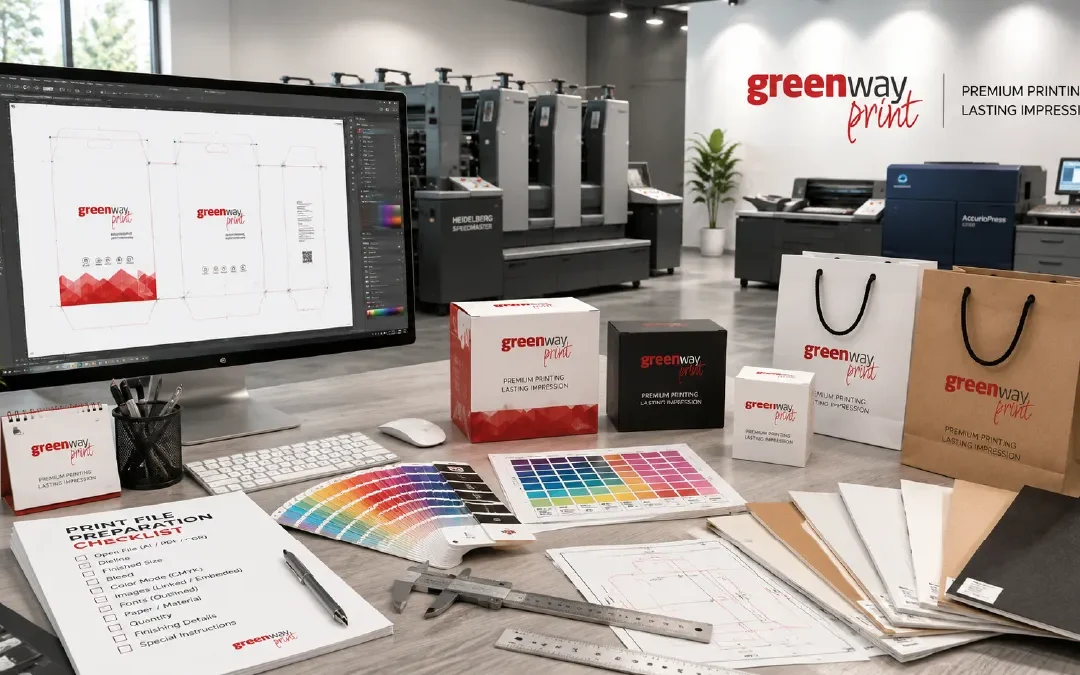
Print File Preparation Checklist is one of the most important resources for anyone planning a custom printing project. Whether you need packaging boxes, paper bags, brochures, business cards, labels, or other printed products, providing the correct information before requesting a quotation can save both time and money.
One of the most common questions printing companies receive is, “How much will it cost to print this?” Unfortunately, there isn’t a fixed answer.
An accurate quotation depends on much more than the product itself. The final price is influenced by factors such as the artwork, dimensions, packaging dieline, material type, paper thickness, quantity, finishing options, and even the production method. Without these details, any price provided is only an estimate—not an actual quotation.
For example, two packaging boxes may look almost identical, yet one could be produced on a Heidelberg Speedmaster 70 press while the other requires a 48 × 33-inch offset press due to its layout and sheet utilization. Likewise, an order for 200 pieces may be more economical with digital printing, while 20,000 pieces will usually be better suited for offset production. The printing method, machine selection, plate-making, die manufacturing, and material consumption all depend on the technical details of your project.
In this guide, you’ll learn exactly what information a commercial printing company needs before preparing an accurate quotation. By following this checklist, you’ll avoid delays, receive more precise pricing, and ensure your project moves smoothly from design to production.
Why an Open Design File Is Essential for an Accurate Printing Quote
Why an Open Design File Matters
One of the biggest misconceptions in commercial printing is that a quotation can be prepared using only a product name and quantity.
For example, a customer might ask:
“I need 2,000 paper bags. What’s the price?”
Unfortunately, there isn’t a single answer.
Before any professional printing company can provide an accurate quotation, the artwork must be reviewed. An open design file allows the production team to evaluate the project’s technical requirements instead of relying on assumptions.
Without the original artwork, every quotation is only an estimate.
What Is an Open Design File?
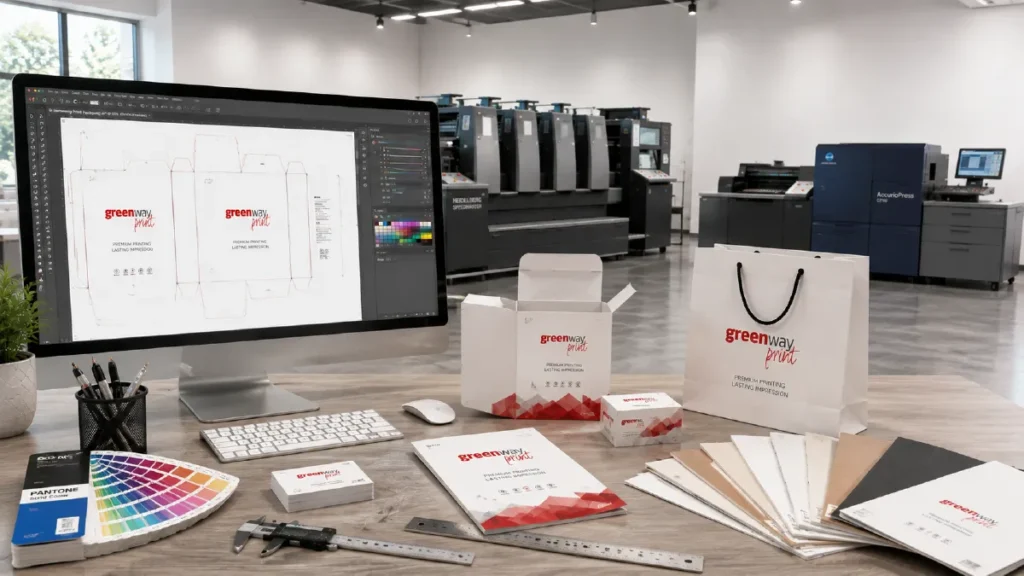
An open design file is the editable source file created in professional design software. Unlike a JPG or PNG image, it contains all of the production information needed for commercial printing.
Common file formats include:
- Adobe Illustrator (.AI)
- CorelDRAW (.CDR)
- Adobe InDesign (.INDD)
- Adobe Photoshop (.PSD)
- Print-ready PDF (when prepared correctly)
These files allow the prepress team to inspect every element before production begins.
What Does the Printing Team Check?
When your artwork is received, it goes through a technical review before pricing is calculated.
The production team checks:
- Finished product dimensions
- Packaging dieline
- Bleed and safety margins
- Color mode (CMYK)
- Font outlines or embedded fonts
- Linked images and their resolution
- Paper utilization
- Folding and glue areas
- Finishing requirements
- Overall printability
Every one of these details directly affects production planning and the final quotation.
Why a JPG or Screenshot Isn’t Enough
Many customers send a screenshot from WhatsApp or a low-resolution JPG and expect an exact quotation.
While these files are useful for understanding the general design, they don’t provide the technical information required for production.
A JPG doesn’t reveal:
- The actual package dimensions
- Bleed settings
- Fold lines
- Glue flaps
- Paper layout
- Vector artwork
- Editable text
- Production specifications
Without this information, it’s impossible to calculate material consumption, machine utilization, or production costs accurately.
A Small Difference Can Significantly Change the Price
Two packaging boxes may appear identical on screen, but their production requirements can be completely different.
For example, increasing the box width by just a few millimeters may reduce the number of layouts that fit on a printing sheet. As a result, more paper is required, material waste increases, and a different press size may become the better production choice.
This is why professional printers always review the open artwork before preparing a quotation.
Providing a complete design file from the beginning helps avoid unnecessary revisions, speeds up the quotation process, and ensures that the price you receive reflects the actual production requirements of your project.
Packaging Dielines: The Hidden Factor That Affects Your Printing Cost
Why a Packaging Dieline Is More Important Than You Think
When customers request a quotation for a custom box, many assume that providing the product dimensions is enough. In reality, a printing company cannot calculate an accurate price without reviewing the packaging dieline.
A dieline is the production blueprint of your packaging. It defines how the box will be printed, cut, folded, glued, and assembled. More importantly, it determines how efficiently the artwork fits on a printing sheet, which directly impacts paper consumption, machine selection, and the overall production cost.
Without a dieline, every quotation is only an approximation.
What Information Does a Dieline Include?
A professionally prepared dieline contains all of the technical details required for manufacturing, including:
- Finished box dimensions
- Cut lines
- Fold (crease) lines
- Glue flaps
- Safety margins
- Bleed area
- Locking tabs
- Material direction (grain direction, when required)
- Production tolerances
These details allow the prepress team to prepare an accurate layout before production begins.
Why Two Boxes of the Same Size May Have Different Prices
This is one of the most common misunderstandings in commercial printing.
Imagine two packaging boxes with identical finished dimensions.
At first glance, they appear to be exactly the same.
However, one box may include a larger glue flap, an automatic lock bottom, or additional folding panels. These small structural differences increase the overall dieline size, reducing the number of layouts that fit on each printing sheet.
As a result:
- More paper is required.
- Material waste increases.
- Production efficiency decreases.
- The final printing cost becomes higher.
This is why experienced printing companies always review the dieline before preparing a quotation.
Sheet Layout Has a Major Impact on Cost
Commercial printing is not priced by the finished box alone—it is priced by how efficiently the artwork fits on the printing sheet.
For example:
A packaging design that fits 12-up on a sheet will usually cost less than a similar design that only fits 10-up. Although the difference seems small, it becomes significant when producing thousands of boxes.
Better sheet utilization means:
- Lower paper consumption
- Less production waste
- Faster press operation
- Reduced overall manufacturing cost
Optimizing the sheet layout is one of the most effective ways to reduce packaging costs without compromising quality.
A Professional Quotation Starts With the Dieline
Before recommending paper, selecting a printing press, estimating production time, or calculating costs, the first document most commercial printers review is the packaging dieline.
Providing a complete, print-ready dieline enables the production team to evaluate your project accurately, choose the most efficient manufacturing method, and deliver a quotation based on actual production requirements—not assumptions.
That’s why a well-prepared dieline isn’t just a design file; it’s the foundation of an accurate printing quotation.
Die Cutting: Why Custom Packaging Requires a Separate Production Tool
Why Every Custom Box Needs a Die
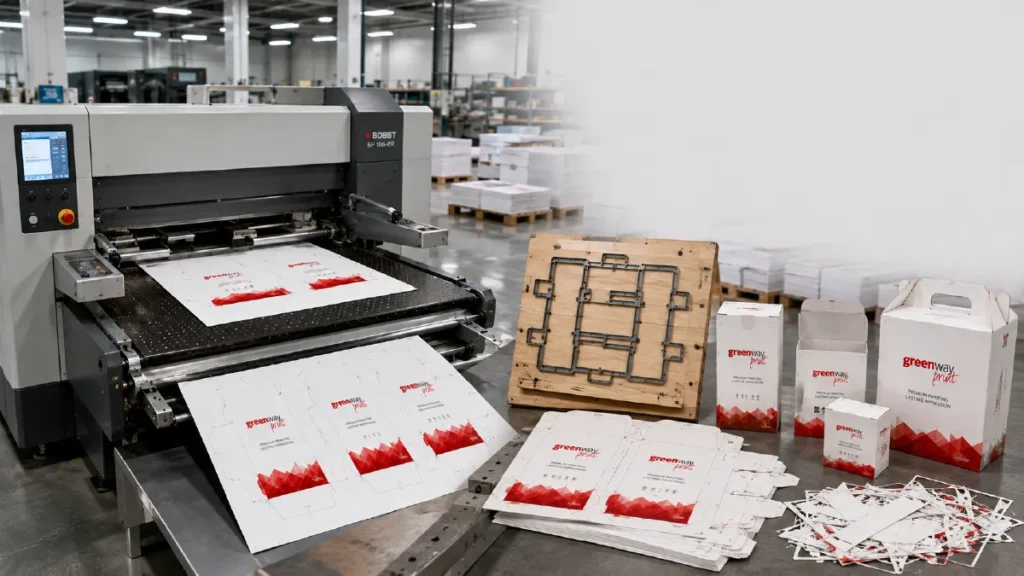
One of the most overlooked production costs in packaging is the die. Many customers assume that once the artwork is printed, the box is ready to be folded and assembled. In reality, the printed sheet must first be cut into its exact shape using a custom-made die.
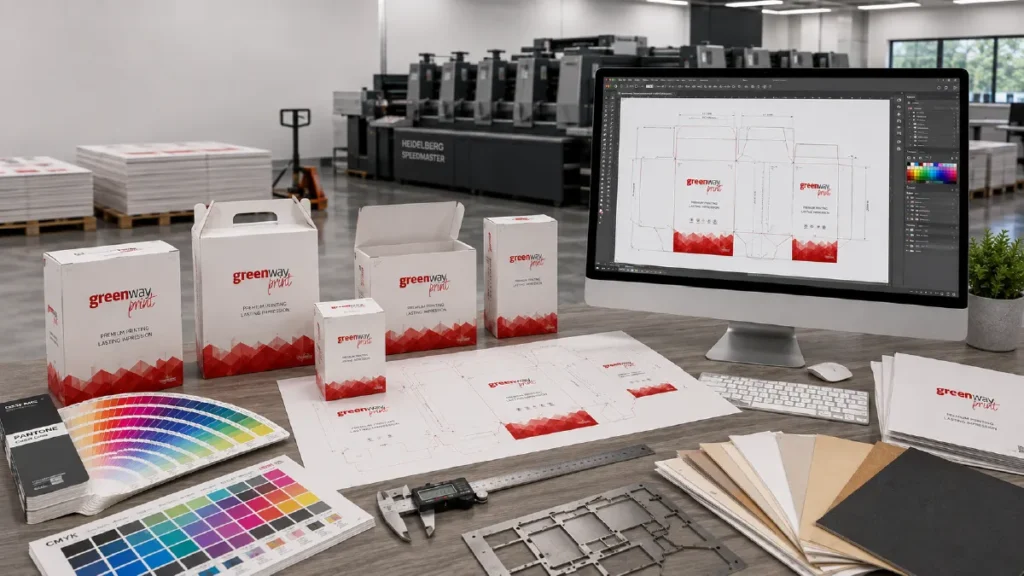
A die is a precision manufacturing tool built specifically for your packaging design. It contains steel cutting and creasing rules that match the dieline exactly, allowing every box to be cut and folded with consistent accuracy.
Without a die, mass production of custom packaging simply isn’t possible.
What Is a Steel-Rule Die?
A steel-rule die is manufactured by embedding sharpened steel blades into a wooden board following the exact outline of the packaging dieline.
The die performs two important operations at the same time:
- Cuts the outer shape of the package
- Creates crease lines for accurate folding
Each packaging style requires its own dedicated die.
Why Does the Die Cost Matter?
Unlike paper or ink, a die is not consumed during production—it is manufactured specifically for your project before printing begins.
This means the die cost is usually the same whether you produce:
- 500 boxes
- 2,000 boxes
- 10,000 boxes
- 50,000 boxes
Because the tooling cost is fixed, it has a much greater impact on small production runs than on large-volume orders.
Can an Existing Die Be Reused?
Sometimes, yes.
If a new project uses exactly the same dimensions and structural design, an existing die may be reused, eliminating the cost of manufacturing a new one.
However, even small changes—such as increasing the height by a few millimeters or modifying the locking mechanism—usually require an entirely new die.
A Die Is an Investment in Production Accuracy
A professionally manufactured die ensures:
- Consistent cutting accuracy
- Clean folding lines
- Faster production
- Reduced material waste
- Better assembly quality
For custom packaging, the die is not an optional accessory—it is one of the most important production tools. Understanding this process helps explain why packaging quotations include tooling costs and why providing an accurate dieline is essential before manufacturing begins.
Choosing the Right Printing Press: Why Machine Selection Changes the Cost
Why the Printing Press Matters
Many customers believe that once the artwork is approved, the quotation is simply based on the number of pieces to be printed.
In reality, one of the biggest pricing factors is which printing press will produce the job.
The same packaging design can often be printed on more than one press. However, the production cost may vary significantly because each machine uses a different sheet size and printing format.
Selecting the right press helps reduce paper waste, improve production efficiency, and lower the overall manufacturing cost.
The Same Box Doesn’t Always Use the Same Printing Press
Imagine two customers ordering exactly the same packaging box.
Both use the same material.
Both require the same printing quality.
Both have identical artwork.
The only difference is the production quantity.
A small order may be produced on a medium-format press, while a high-volume order may be moved to a larger offset press that fits more layouts on each sheet.
Although the finished boxes look identical, the production strategy is completely different.
Sheet Utilization Is the Key
Professional printers don’t calculate cost by counting finished boxes—they calculate how efficiently the artwork fits on a printing sheet.
For example:
| Printing Press | Approximate Sheet Size | Packaging Layout | Production Efficiency |
|---|---|---|---|
| 48 × 33 Offset Press | Large Format | 16-up | Excellent for large-volume production |
| Heidelberg Speedmaster SM 74 (B2) | Medium Format | 12-up | Ideal for medium production runs |
| Heidelberg Speedmaster XL 105 (B1) | Large Format | 18-up (depending on design) | Maximum productivity for high-volume jobs |
Even a small improvement in sheet utilization can save thousands of sheets during large production runs.
Why Customers Usually Can’t See This Difference
From the customer’s perspective, every finished box looks exactly the same.
Inside the factory, however, the production team evaluates:
- Sheet size
- Paper utilization
- Press availability
- Production speed
- Make-ready time
- Paper waste
- Quantity
- Delivery deadline
These factors determine which press delivers the best balance between quality, efficiency, and cost.
Machine Selection Is Part of Professional Production Planning
An accurate quotation is never based on guesswork.
Before pricing a project, the production team reviews the artwork, packaging dieline, quantity, and material specifications to determine the most efficient printing press.
This planning process ensures lower production costs, better resource utilization, and consistent print quality—benefits that ultimately help both the printer and the customer.
Your Complete Print File Preparation Checklist
Before contacting a commercial printing company, gathering the right information can significantly reduce back-and-forth communication and help you receive a faster, more accurate quotation.
Use this checklist before requesting pricing for your next project.
Project Information
Product type (Box, Paper Bag, Brochure, Business Card, Label, etc.)
Finished dimensions (Length × Width × Height where applicable)
Required quantity
Expected delivery date
Design Files
Editable artwork (AI, CDR, INDD, PSD, or Print-ready PDF)
Packaging dieline (for boxes, sleeves, folders, or bags)
Fonts converted to outlines or embedded
High-resolution linked images (300 DPI)
CMYK color mode
3 mm bleed (or your printer’s required bleed)
Safe margin maintained
Material Specifications
Paper or board type
Paper thickness (GSM)
Single-sided or double-sided printing
Number of colors (CMYK or Pantone)
Finishing Requirements
Matte or Gloss Lamination
Spot UV
Gold or Silver Foil Stamping
Embossing or Debossing
Die Cutting
Folding
Window Patching (if required)
Packaging & Production Details
Assembly required?
Flat delivery or assembled boxes?
Special packing instructions
Shipping destination
Why This Checklist Matters
Providing complete project information allows the production team to evaluate your artwork, select the most efficient printing method, determine the appropriate press, calculate material consumption, estimate tooling requirements, and prepare an accurate quotation without unnecessary delays.
Instead of relying on assumptions, every pricing decision is based on real production specifications—resulting in better planning, fewer revisions, and a smoother manufacturing process.
Final Thoughts
A professional printing quotation is never based on guesswork. It is the result of careful evaluation, technical planning, and production expertise.
Whether you’re ordering custom packaging, paper bags, brochures, business cards, labels, or other commercial printed products, taking a few extra minutes to prepare your files can save valuable time, reduce production costs, and help ensure the best possible printing results.
Following this Print File Preparation Checklist gives both you and your printing partner a clear starting point, making the entire process faster, more accurate, and more efficient from quotation to final delivery.