What Is UV Printing?
In today’s competitive business landscape, creating visually appealing and durable printed materials is more important than ever. Whether you’re promoting your brand through eye-catching signage, premium product packaging, customized promotional items, or elegant interior décor, the quality of your print directly influences how customers perceive your business. As printing technology continues to evolve, companies are looking for solutions that combine speed, precision, durability, and versatility. One technology that has transformed the printing industry is UV printing.
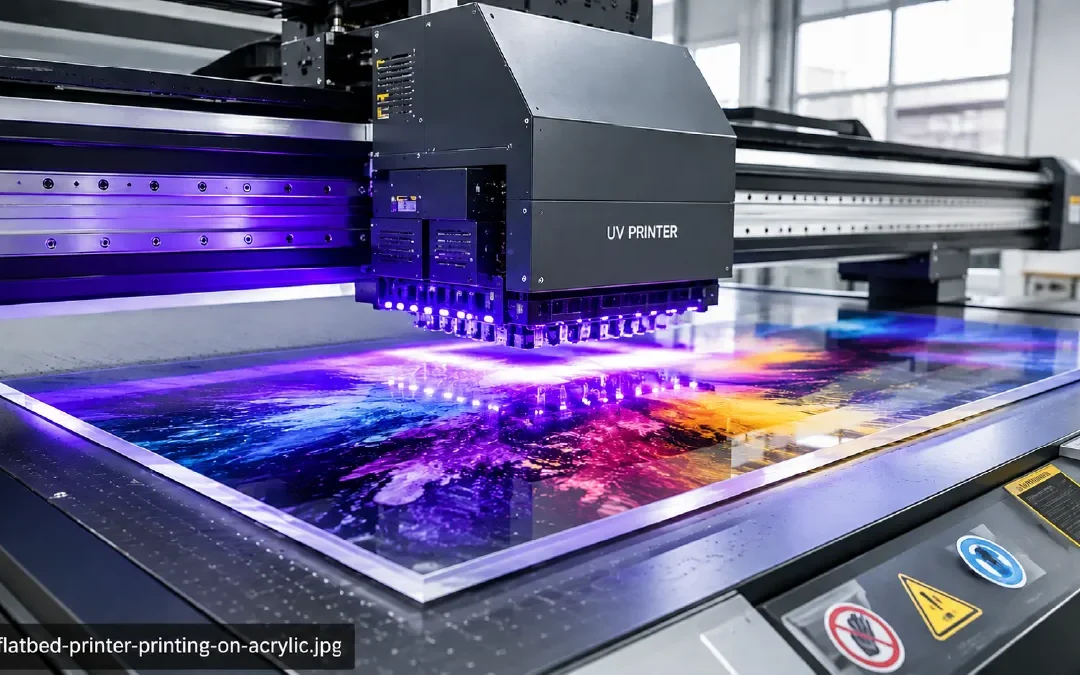
UV printing, short for Ultraviolet Printing, is an advanced digital printing method that uses ultraviolet (UV) light to instantly cure specially formulated inks as they are applied to a surface. Unlike traditional printing methods, where ink dries naturally through evaporation or heat, UV printing uses UV LED lamps to harden the ink immediately. This instant curing process creates vibrant colors, sharp details, and a durable finish that is resistant to scratches, moisture, and fading.
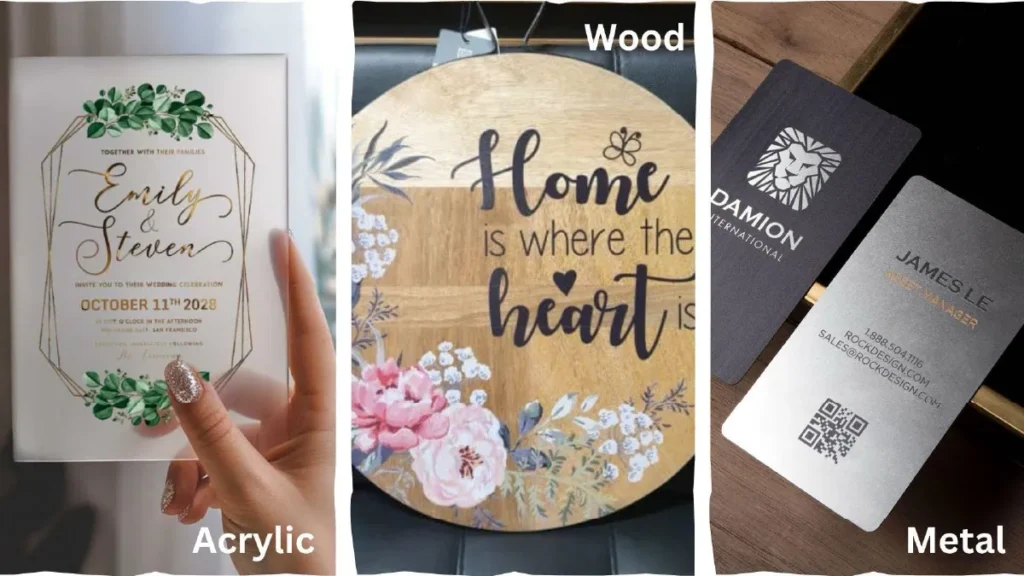
One of the biggest advantages of UV printing is its ability to print directly on a wide variety of materials. From acrylic and glass to wood, metal, PVC, leather, ceramic, and plastic, UV printing delivers exceptional results without requiring additional mounting or transfer processes. This flexibility makes it an ideal choice for businesses across industries such as retail, hospitality, healthcare, construction, manufacturing, education, and corporate branding.
As consumer expectations continue to rise, businesses need printed products that not only look professional but also last longer. UV printing meets these demands by producing high-quality prints with excellent color accuracy and long-term durability. Since the ink cures instantly, there is no waiting time for drying, allowing faster production and shorter delivery times. This makes UV printing particularly valuable for projects with tight deadlines or large production volumes.
Another reason for the growing popularity of UV printing is its environmentally friendly process. Traditional solvent-based printing often releases volatile organic compounds (VOCs) into the air during the drying process. In contrast, UV inks cure instantly with minimal emissions, reducing waste and making the process cleaner and more sustainable. Many businesses choose UV printing not only for its superior quality but also because it aligns with modern environmental standards.
Today, UV printing is used to create a wide range of products, including business signs, promotional displays, exhibition graphics, customized corporate gifts, product packaging, labels, decorative panels, business cards, and many other branding materials. Its ability to produce vibrant, long-lasting prints on both rigid and flexible surfaces has made it one of the most trusted printing technologies in the industry.
In this comprehensive guide, you’ll learn everything you need to know about UV printing. We’ll explore how the technology works, its key benefits, the materials it can print on, its most common applications, and how it compares to traditional printing methods. Whether you’re a business owner looking for premium printing solutions or simply interested in understanding the latest advancements in the printing industry, this guide will help you make informed decisions.
How Does UV Printing Work? What Is UV Printing Process Explained?
One of the biggest reasons UV printing has become so popular is its unique printing process. Unlike traditional printing methods, where ink needs time to dry through evaporation or heat, UV printing uses ultraviolet (UV) LED light to cure the ink instantly. This advanced technology not only speeds up production but also delivers sharper details, brighter colors, and a more durable finish.
The entire process is automated and highly precise, allowing businesses to produce premium-quality prints on a wide variety of materials without sacrificing efficiency.
Step 1: Preparing the Artwork
Every successful print starts with a professionally designed digital file. Designers typically create artwork using software such as Adobe Illustrator, Photoshop, or CorelDRAW. The design is then exported in a print-ready format with the correct color profile and resolution.
Before printing begins, the operator checks:
- Image resolution
- Print dimensions
- Color accuracy
- Bleed and safety margins
- Material size and thickness
Proper artwork preparation ensures that the final print looks exactly as intended and reduces the chance of printing errors.
Step 2: Loading the Material
After the artwork is ready, the printing material is placed on the UV printer.
Unlike conventional printers that mainly print on paper, UV printers can handle many different materials, including:
- Acrylic
- Glass
- PVC
- Foam Board
- Wood
- Metal
- Plastic
- Leather
- Ceramic
- Cardboard
The printer’s vacuum table securely holds the material in place during printing, preventing movement and ensuring perfect alignment.
Step 3: Applying UV Ink
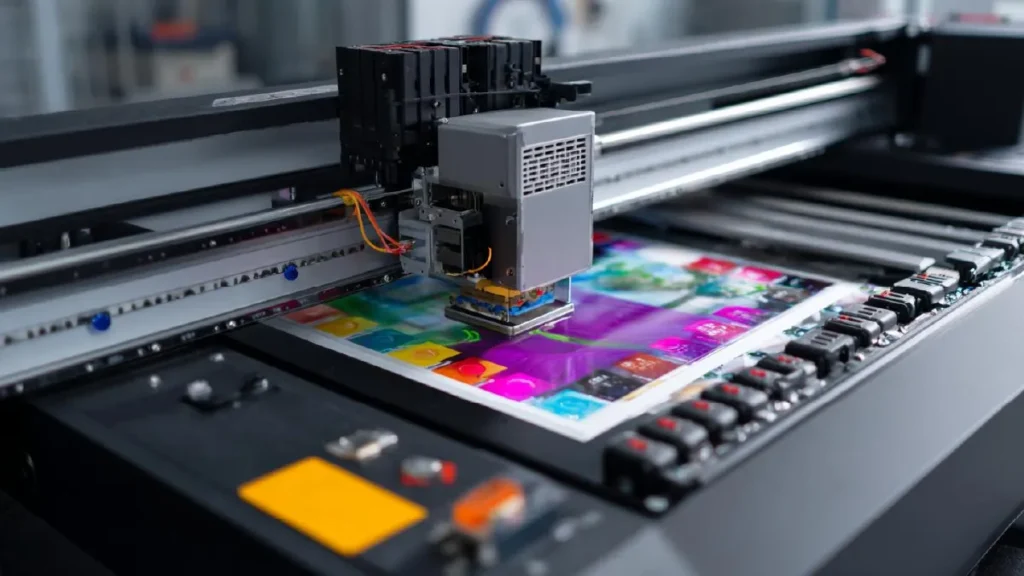
Once the material is positioned correctly, the print head begins depositing microscopic droplets of specially formulated UV ink onto the surface.
Unlike traditional inks that soak into the material, UV ink remains on the surface until it is exposed to ultraviolet light. This helps preserve color vibrancy and allows even non-porous materials like glass, acrylic, and metal to achieve excellent print quality.
Modern UV printers use advanced print heads capable of producing extremely fine droplets, resulting in:
- Smooth gradients
- Crisp text
- High-resolution graphics
- Excellent color consistency
This level of precision makes UV printing ideal for premium signage, packaging, and branded products.
Step 4: Instant UV LED Curing
The most important part of the UV printing process is the curing stage.
As soon as the UV ink is deposited, powerful UV LED lamps mounted beside the print head shine ultraviolet light onto the fresh ink. Within a fraction of a second, the ink undergoes a chemical reaction that transforms it from a liquid into a solid layer.
Because the ink cures instantly:
- There is no drying time.
- Prints can be handled immediately.
- Smudging and ink bleeding are eliminated.
- Production becomes faster and more efficient.
This instant curing process is one of the biggest advantages of UV printing over conventional printing technologies.
Why Does UV Printing Produce Better Results?
The quality of UV printing comes from the combination of precision printing and instant curing.
Since the ink does not spread or absorb into the material, every detail remains sharp and vibrant. Fine lines, small text, gradients, and complex graphics are reproduced with exceptional accuracy.
Additionally, the cured ink forms a strong protective layer that is highly resistant to:
- Water
- Scratches
- UV sunlight
- Chemicals
- Daily wear and tear
This makes UV printing suitable for both indoor and outdoor applications, where durability is essential.
A Fast, Efficient, and Reliable Printing Process
From artwork preparation to instant curing, every stage of UV printing is designed to maximize quality and efficiency. Businesses benefit from shorter production times, fewer printing errors, and premium-looking results across a wide range of materials.
Whether you’re producing custom signage, luxury packaging, promotional products, or decorative displays, UV printing provides a reliable solution that combines speed, versatility, and long-lasting performance.
What Is UV Printing? Benefits and Materials You Can Print On
As businesses continue to demand faster production, premium quality, and longer-lasting printed products, UV printing has become one of the most trusted printing technologies available today. Unlike conventional printing methods, UV printing combines speed, precision, and durability in a single process, making it suitable for everything from business signage to luxury packaging.
One of the main reasons businesses choose UV printing is its ability to deliver professional results on many different surfaces while maintaining exceptional color accuracy and long-term durability. Whether you’re creating retail displays, promotional products, branded packaging, or custom interior décor, UV printing offers advantages that traditional printing methods often cannot match.
Let’s explore why UV printing has become the preferred choice for businesses worldwide.
Instant Drying for Faster Production
One of the most significant advantages of UV printing is its instant drying process. Traditional printing methods often require several minutes or even hours for ink to dry completely. During this time, printed materials can easily become smudged or damaged if handled too early.
UV printing solves this problem by using UV LED lamps to cure the ink immediately after it is applied. As a result, every printed item comes out completely dry and ready for handling, packaging, or installation.
This faster production process helps businesses reduce turnaround times, improve workflow efficiency, and complete large printing projects more quickly.
Superior Print Quality
UV printing is well known for producing exceptionally sharp and vibrant prints. Since the ink stays on the surface instead of being absorbed into the material, colors appear richer and more vivid.
This technology produces:
- High-resolution graphics
- Crisp text and fine details
- Smooth color gradients
- Accurate color reproduction
- Premium-looking finishes
Whether printing a company logo, product packaging, or an advertising display, UV printing ensures professional results that enhance your brand image.
Long-Lasting Durability
Durability is another major reason why businesses invest in UV printing.
Once the UV ink is cured, it forms a hard protective layer that resists everyday wear and environmental conditions. UV-printed products are highly resistant to scratches, moisture, sunlight, and fading, making them suitable for both indoor and outdoor use.
Because of their durability, UV-printed signs, promotional products, and decorative displays maintain their appearance for years with minimal maintenance.
Print on a Wide Range of Materials
Perhaps the greatest advantage of UV printing is its versatility.
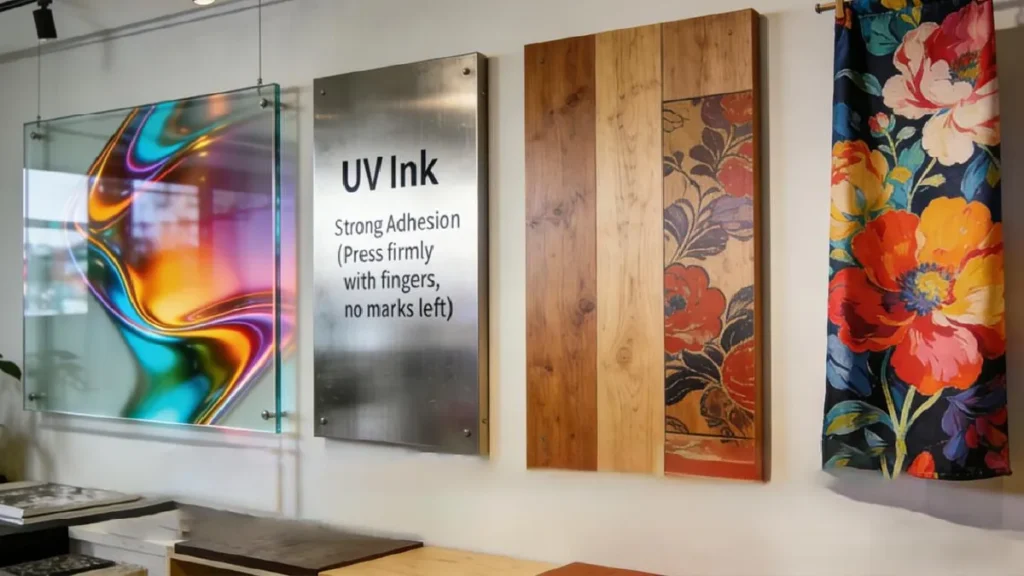
Unlike many conventional printing methods that are limited to paper or vinyl, UV printers can print directly on a wide variety of rigid and flexible materials without compromising print quality.
Some of the most commonly used materials include:
- Acrylic – Perfect for premium office signs, illuminated displays, and exhibition graphics.
- Glass – Ideal for decorative panels, restaurant interiors, and corporate branding.
- Wood – Suitable for personalized gifts, wall art, and interior decoration.
- PVC – Commonly used for advertising boards and indoor signage.
- Metal – Excellent for industrial labels, nameplates, and luxury signage.
- Plastic – Frequently used for promotional products and branded packaging.
- Leather – Perfect for notebooks, folders, wallets, and premium corporate gifts.
- Ceramic – Ideal for personalized mugs, decorative tiles, and custom souvenirs.
This flexibility allows businesses to produce unique products without changing printing technology.
Eco-Friendly Printing Solution
Environmental responsibility has become increasingly important for modern businesses. UV printing offers a cleaner alternative to many traditional solvent-based printing methods.
Because the ink cures instantly rather than evaporating, UV printing produces significantly lower VOC (Volatile Organic Compound) emissions. It also generates less waste and consumes less energy when using modern UV LED curing systems.
For businesses looking to adopt more sustainable production methods, UV printing provides an environmentally friendly solution without compromising quality.
Cost-Effective in the Long Run
Although UV printing may have a slightly higher initial production cost than some traditional methods, it often provides better long-term value.
Its durability reduces the need for frequent replacements, while faster production improves efficiency and lowers labor costs. Businesses also benefit from fewer printing errors and less material waste.
When quality, durability, and production speed are considered together, UV printing becomes a smart investment for companies seeking reliable, high-quality printing solutions.
Why UV Printing Is the Preferred Choice
From vibrant colors and instant drying to exceptional durability and compatibility with multiple materials, UV printing offers everything modern businesses need in a professional printing solution.
Whether you’re producing custom signage, luxury packaging, promotional products, retail displays, or interior décor, UV printing delivers outstanding results that help your brand stand out while ensuring long-lasting performance.
Common Applications of UV Printing
One of the biggest reasons UV printing has become so popular is its incredible versatility. Unlike traditional printing methods that are often limited to paper or specific materials, UV printing can produce high-quality, durable prints on a wide range of rigid and flexible surfaces. This flexibility makes it suitable for businesses across many industries, from retail and hospitality to healthcare, education, manufacturing, and corporate branding.
Whether you’re looking to create eye-catching marketing materials or premium customized products, UV printing offers endless possibilities. Its ability to produce vibrant colors, fine details, and long-lasting finishes has made it one of the most reliable printing technologies for commercial and personal use.
Below are some of the most common applications of UV printing and how businesses use this technology to strengthen their brand identity.
Signage and Display Solutions
Signage is one of the largest industries that relies on UV printing. Businesses need signs that are attractive, durable, and capable of withstanding daily exposure to sunlight, dust, and moisture.
UV printing produces sharp text, vivid graphics, and weather-resistant finishes, making it perfect for both indoor and outdoor signage.
Popular signage products include:
- Acrylic Signs
- Office Signage
- Reception Signs
- Wayfinding Signs
- Shop Front Signs
- Directional Signs
- Exhibition Panels
- Retail Display Boards
Because UV ink bonds directly to the material, the finished signs maintain their professional appearance for years with minimal maintenance.
Product Packaging
Today’s consumers are heavily influenced by product packaging. Attractive packaging helps products stand out on store shelves while reinforcing a company’s brand identity.
UV printing allows businesses to create premium packaging with rich colors, crisp graphics, and luxurious finishes.
Common packaging applications include:
- Cosmetic Boxes
- Gift Boxes
- Paper Bags
- Product Labels
- Luxury Packaging
- Food Packaging
- Electronic Product Boxes
High-quality UV printing helps brands create memorable first impressions that encourage customer confidence and increase product appeal.
Promotional Products
Custom promotional products remain one of the most effective marketing tools for businesses. UV printing allows logos, graphics, and personalized designs to be printed directly onto a variety of promotional items.
Some popular examples include:
- Pens
- USB Drives
- Keychains
- Phone Cases
- Power Banks
- Awards and Trophies
- Name Badges
- Corporate Gift Items
These customized products help businesses increase brand visibility while leaving a lasting impression on customers and clients.
Interior Decoration
UV printing is also widely used in modern interior design. Because it can print directly on materials such as glass, wood, acrylic, and ceramic, it enables architects, designers, and homeowners to create unique decorative elements.
Popular interior decoration applications include:
- Decorative Glass Panels
- Wall Art
- Acrylic Photo Panels
- Wooden Decorative Boards
- Custom Furniture Graphics
- Kitchen Backsplashes
- Decorative Tiles
The combination of vibrant colors and durable finishes makes UV printing ideal for enhancing both residential and commercial spaces.
Retail Branding
Retail stores use UV printing to create visually appealing environments that attract customers and strengthen brand recognition.
Retail branding products include:
- Window Graphics
- Point-of-Sale Displays
- Promotional Stands
- Shelf Talkers
- Hanging Signs
- Product Display Panels
High-quality retail graphics help stores communicate promotions effectively while creating a more engaging shopping experience.
Corporate Branding
Professional branding plays a crucial role in building customer trust and business credibility. UV printing allows companies to maintain a consistent visual identity across multiple branded materials.
Corporate applications include:
- Office Signage
- Meeting Room Signs
- Company Logos
- Employee Name Plates
- Reception Displays
- Branded Awards
- Corporate Gifts
These printed materials help businesses create a professional workplace while reinforcing their brand image.
Why Businesses Prefer UV Printing for Commercial Applications
Businesses across different industries continue to choose UV printing because it combines quality, speed, and versatility in one technology. Whether producing a single customized item or thousands of branded products, UV printing delivers consistent results with minimal production time.
Its ability to print on multiple materials, combined with outstanding durability and vibrant colors, makes it the preferred solution for companies looking to invest in premium-quality printing.
From small businesses to large corporations, UV printing continues to transform the way products are branded, displayed, and marketed.
UV Printing vs Traditional Printing
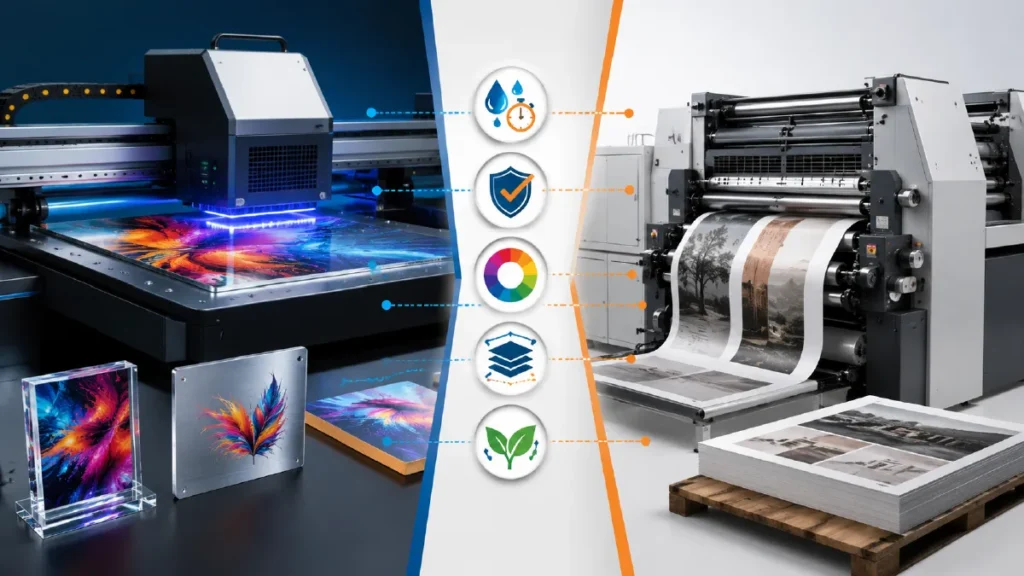
Choosing the right printing technology is essential for achieving the best results for your project. While traditional printing methods such as offset and solvent printing are still widely used, UV printing has become the preferred option for businesses that require premium quality, faster production, and greater versatility.
One of the most noticeable differences is how the ink dries. Traditional printing relies on air drying, heat, or absorption into the material, which can take several minutes or even hours. During this time, prints may smudge or require additional handling before they are ready for use.
UV printing uses ultraviolet LED lamps to cure the ink instantly as it is printed. This means the finished product is completely dry the moment it leaves the printer, reducing production time and allowing immediate handling or installation.
Another important advantage is material compatibility. Traditional printing often works best on paper, cardboard, or vinyl, whereas UV printing can print directly onto acrylic, glass, wood, PVC, metal, plastic, leather, ceramic, and many other rigid or flexible materials. This makes UV printing an excellent choice for businesses that require customized products across different industries.
When it comes to durability, UV printing also stands out. The cured ink forms a protective layer that resists scratches, moisture, fading, and everyday wear. This makes UV-printed products suitable for both indoor and outdoor applications, ensuring they maintain their appearance for a long time.
Although UV printing may cost slightly more for certain projects, the long-term value often outweighs the initial investment. Businesses benefit from fewer reprints, less maintenance, and higher customer satisfaction thanks to the superior quality and durability of UV-printed products.
UV Printing vs Traditional Printing Comparison
| Feature | UV Printing | Traditional Printing |
|---|---|---|
| Drying Time | Instant UV LED curing | Air or heat drying |
| Print Quality | Excellent | Good |
| Color Vibrancy | Rich and vibrant | Standard |
| Material Compatibility | Acrylic, Glass, Wood, PVC, Metal, Plastic, Leather and more | Mostly Paper and Vinyl |
| Scratch Resistance | High | Moderate |
| Water Resistance | Excellent | Depends on the ink |
| Outdoor Durability | Excellent | Limited |
| Production Speed | Faster | Slower |
| Environmental Impact | Low VOC emissions | Higher solvent emissions in some methods |
Frequently Asked Questions (FAQs)
Is UV printing waterproof?
Yes. UV-cured inks create a durable surface that is highly resistant to water, making UV printing suitable for outdoor signs, promotional products, and packaging.
How long does UV printing last?
With proper care, UV-printed products can maintain their quality for many years. Indoor applications often last even longer, while outdoor products are designed to withstand sunlight and changing weather conditions.
Can UV printers print on glass and acrylic?
Absolutely. UV printing is one of the best technologies for printing directly onto glass, acrylic, PVC, wood, metal, ceramic, leather, and many other materials.
Is UV printing environmentally friendly?
Compared with many traditional solvent-based printing methods, UV printing is considered more environmentally friendly because it produces lower VOC emissions and generates less waste through its instant curing process.
Is UV printing suitable for small businesses?
Yes. Whether you need a single customized product or a large commercial order, UV printing offers excellent flexibility, premium quality, and fast production, making it a great choice for businesses of all sizes.
Final Thoughts
UV printing has transformed the modern printing industry by combining speed, precision, durability, and versatility into one advanced printing solution. Its ability to produce vibrant, high-resolution prints on a wide range of materials makes it ideal for signage, packaging, promotional products, interior décor, retail branding, and countless other commercial applications.
As businesses continue to seek high-quality printing solutions that deliver lasting value, UV printing remains one of the smartest investments for creating professional and eye-catching products. Whether you’re launching a new brand, upgrading your store signage, producing luxury packaging, or creating customized promotional items, UV printing provides the quality and reliability needed to make a lasting impression.
If you’re looking for premium UV printing services in Riyadh, GreenwayPrint offers high-quality UV printing solutions tailored to your business needs. From custom signage and packaging to promotional products and corporate branding materials, our team is committed to delivering exceptional print quality, fast turnaround times, and professional service.
Thank You for Reading!
We hope this guide has helped you understand what UV printing is, how it works, its benefits, and its wide range of applications. If you’re planning your next printing project and need expert advice, feel free to contact GreenwayPrint. Our experienced team is ready to help you choose the right printing solution for your brand and business goals.