DTF, Screen Printing, or Embroidery: Which Printing Technique Suits Your Clothing Best?
Choosing the right printing technique is one of the most important decisions when creating custom apparel. Whether you’re printing T-shirts for a business, uniforms for your staff, promotional clothing for an event, or personalized garments for a brand, the printing method you choose directly affects the final appearance, durability, cost, and overall quality of the product.
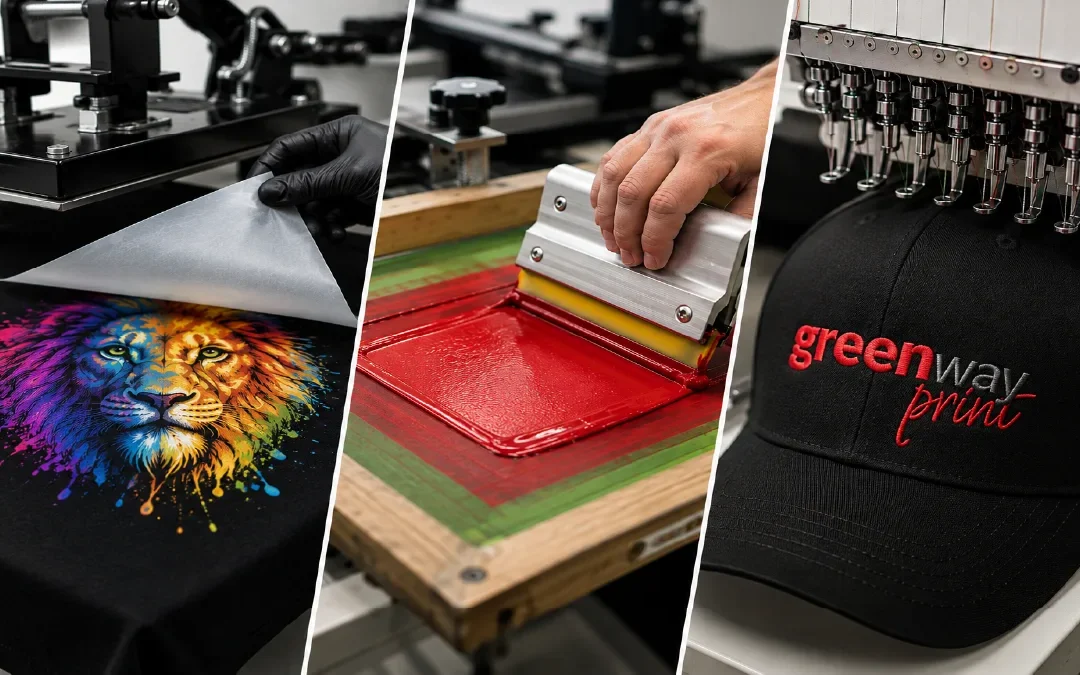
Among the most popular decoration methods today are DTF (Direct to Film) Printing, Screen Printing, and Embroidery. Each technique offers unique advantages and is designed for different applications. While DTF printing delivers vibrant full-colour designs with exceptional detail, screen printing remains the preferred option for large production runs with simple artwork. Embroidery, on the other hand, provides a premium and professional finish that is ideal for corporate uniforms, caps, polo shirts, and workwear.
There is no single printing technique that is perfect for every project. The best choice depends on several factors, including your garment type, design complexity, order quantity, budget, and the look you want to achieve.
In this guide, we’ll explain how each printing method works, compare their advantages and limitations, and help you decide which option is best for your clothing project. By the end of this article, you’ll have a clear understanding of when to choose DTF printing, when screen printing makes the most sense, and when embroidery is the ideal solution.
What is DTF Printing?
DTF (Direct to Film) printing is a modern garment decoration method that transfers a printed design from a special PET film directly onto fabric using heat and pressure. Unlike some traditional printing techniques, DTF does not require the design to be printed directly onto the garment. Instead, the artwork is first printed onto a transfer film using specialized DTF inks, coated with adhesive powder, cured, and then heat-pressed onto the fabric.
One of the biggest advantages of DTF printing is its versatility. It produces vibrant colours, sharp details, and durable prints on a wide variety of fabrics, including cotton, polyester, blends, canvas, and many other textile materials. This makes DTF an excellent choice for custom T-shirts, hoodies, tote bags, uniforms, promotional apparel, and personalized clothing.
DTF printing is particularly suitable for full-colour graphics, gradients, photographs, and complex designs that require exceptional detail. It is also an efficient solution for both small and medium production runs, as it requires minimal setup compared to some traditional printing methods.
Whether you’re creating custom apparel for a business, an event, a sports team, or your own clothing brand, DTF printing offers a balance of quality, flexibility, and durability that makes it one of the fastest-growing printing technologies in the apparel industry.
See DTF Printing in Action
Understanding DTF printing is easier when you see the process in action. Watch the short video below to see how a design is printed onto a special transfer film and then heat-pressed onto a garment. This demonstration highlights the precision, vibrant colour reproduction, and professional finish that make DTF printing one of the most popular choices for custom apparel
When is DTF less suitable?
DTF is not the best choice in every situation. Are you suddenly going to print hundreds of shirts with the same design? Then DTF is usually not your cheapest option. This is because each print is produced individually, meaning the price per piece does not drop as quickly.
And are you looking for a luxurious, tactile finish? Then DTF is not always the best match either. The print lies on the fabric and feels smooth, whereas sometimes you actually want a bit more texture or relief.
What is Screen Printing?
Screen printing is one of the oldest and most widely used garment printing techniques. It involves pushing ink through a fine mesh screen onto the fabric, with each colour applied using a separate screen. This process creates bold, vibrant prints with excellent colour consistency, making it a preferred choice for large-volume apparel production.
One of the biggest advantages of screen printing is its cost-effectiveness for bulk orders. Although preparing the screens requires an initial setup, the cost per garment decreases significantly as the order quantity increases. This makes screen printing ideal for businesses, schools, sports teams, events, promotional campaigns, and corporate uniforms.
Screen printing is best suited for simple to moderately detailed artwork with a limited number of colours. It produces durable prints that can withstand frequent washing while maintaining their vibrant appearance. However, because each colour requires its own screen, highly detailed designs or photographs with many colours are generally better suited to DTF printing.
If you’re planning to print a large number of garments with the same design, screen printing offers an excellent balance of quality, durability, and affordability.
See Screen Printing in Action
Watch the video below to see how screen printing works. The process demonstrates how ink is transferred through a mesh screen onto the garment, creating vibrant, durable prints that are ideal for bulk apparel production.
When is screen printing less suitable?
Do you work with small quantities, personalised items, or a design that changes frequently? Then screen printing quickly becomes impractical. After all, a separate preparation is required for every variant and colour, which you have to set up again every time.
In short: less flexible, but rock-solid if used correctly.
What is Embroidery?
Embroidery is a premium garment decoration technique that uses high-quality threads to stitch logos, text, and designs directly onto fabric. Unlike printing methods that apply ink to the surface, embroidery creates a textured and three-dimensional finish by sewing the design into the material. This gives garments a sophisticated, durable, and professional appearance.
One of the biggest advantages of embroidery is its exceptional durability. Since the design is stitched rather than printed, it resists fading, cracking, and peeling even after repeated washing and daily wear. This makes embroidery an excellent choice for businesses, schools, hotels, restaurants, healthcare providers, and organizations looking for long-lasting branded apparel.
Embroidery is best suited for logos, company names, monograms, and simple artwork. It works particularly well on polo shirts, uniforms, jackets, caps, hoodies, bags, and other premium garments where a high-end appearance is important. However, because embroidery uses thread instead of ink, it is generally not recommended for highly detailed images, photographs, or large full-colour graphics.
If you want your clothing to project a professional, elegant, and premium image, embroidery remains one of the most trusted and timeless decoration methods available.
See Embroidery in Action
Watch the video below to see how the embroidery process transforms a digital design into a beautifully stitched logo or artwork. From precise thread placement to the finished product, this demonstration highlights why embroidery is the preferred choice for premium uniforms, corporate apparel, caps, and branded clothing.
When is embroidery less suitable?
Embroidery isn’t always the best match for thin T-shirts. The fabric can start to stretch and it can quickly feel a bit heavier. If the design has with small details or colour gradients, then embroidery quickly becomes a challenge.
So, embroidery isn’t a jack-of-all-trades, but it is the choice when appearance matters.
Quick comparison
| Technique | DTF | Screen printing | Embroidery |
| Best for: | small quantities, lots of detail and multiple colours | large print runs and large designs | premium logos, workwear and hoodies |
| Benefits: | flexile and fast | sustainable and efficient at scale | luxurious appearance and long lifespan |
| Be aware of: | less advantageous for larger quantities | more preparation needed | less suitable for thin fabrics and complex designs |
Which technique suits your design?
You just want to know: what is the best choice for me? That makes sense. The choice often lies in the details of your design and how you plan to use it. Fortunately, you don’t have to figure that out yourself.
Undecided between DTF, screen printing, and embroidery? Choose your garment and email your design to info@greenwayprint.net We will then advise you on which technique best suits your order.